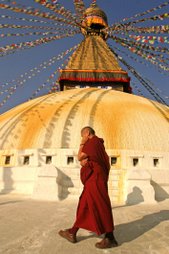
What are the differences between us and awakened individuals? Most of us identify ourselves with our bodies. We think that we are the body but the self-realized know that we have a body, just as we have a car, or a house or any other material object.
Most of us believe that we are our emotions. Awakened individuals know that these emotions just rise inside us, like the wind or storm.
We sometimes believe that we are the roles that we play in society: like mother, father, teacher, manager, writer, doctor, sister or brother. Awakened individuals know that we have roles like actors who play their parts but are quite different from the roles that they play.
Most of us believe that we are our thoughts. Awakened individuals know that we have thoughts and we are separate from our thoughts.
Most of us believe that we are our stories. For example, those who have suffered trauma are often attached to the experience and believe that they are the story.
Awakened individuals know that their stories are separate from who they truly are. Most of us think of ourselves as if we are separate from others. Awakened individuals know that we are one with everyone and the whole universe.
Most of us often think of the past and the future as real. Awakened individuals know that the past and future are convenient labels but are not real. There is only the eternal now.
Most of us depend on material things to define our identity. Awakened individuals have little or no attachment to material things.
Everywhere we look, we see the trend towards more and more efficiency: Less work for greater output, less investment for greater profits, less effort for greater results.
Yet, as we inch towards the second and third decades of the 21st century, we are reminded of a basic tendency of human beings to live the inefficient life. Is it efficient for humans as a race to build structures like the Twin Towers, or bridges over the Tigris and the Euphrates or sacred sites and then destroy them for whatever reasons?
Is it efficient to build financial institutions and then let them crumble because they were designed to benefit only a segment of the society?
Is it efficient to invent and market products that are harmful to our lives and endanger the earth -- personal care products that hasten the aging process and cause cancer, foods that sterilize, etc., etc?
Is it efficient to describe success by the disproportionate wealth of a negligible few when the majority of the human race wallows in abject poverty, disease and despair?
While we are trapped in selfish efficiency concepts of strategic planning, political expediency, and profit maximization that work for only a few, we as a race are losing sight of the fundamental imperative. This is OUR world and its time to ask whose efficiency must make it work.
Our financial institutions will crumble, our most cherished edifices annihilated, we will self-destruct -- if we fail to rediscover and re-energize our societies with life’s ultimate perennial efficient principle.
This New Year and two decades ahead, the world will thirst for those who will rekindle that flame, those who will work to sustain this earth for the greater good of all.
They will be those who, like Albert Einstein, will seek above all to “know God’s thoughts” and let the details follow.
They will be those who will seek true happiness, not in finite things, but as the 2500 years old Chandogya Upanishad reveals: “There is no happiness in anything finite. The infinite alone is happiness. But one must desire to understand the infinite.”
The ultimate efficient principle then is to seek to understand the mind of God, the Kingdom of Heaven within, the Infinite Invisible. On this foundation alone can we sustain and build a world of justice and fairness that recognizes the interconnected of all human beings.
2008 is the year we can recommit to recognize the mystery within as the rock on which we can build in the long run the truly lasting and efficient social, economic and political structures.
Enlightenment means many things to many people. To me it is the state of awareness in which we merge with the Great Unknown and our identification with the self fall away.
The process of awakening takes many paths but here is the general roadmap.
First, you must be aware of the need for something greater than your personal consciousness. You ask questions such as: "Who am I? Where did I come from, where am I going? What is the meaning of life?" When these questions persist, it indicates that you are ready to go on the path that culminates in the answer to these questions. In other words, these questions show that you are thirsty for the water of life. Enlightenment quenches that thirst.
This thirst is insatiable. It can be filled only with the Ocean of Divine Love. Nothing else does it. Not fame. Not wealth. Not power. Not sex. Only union with the divine beloved.
A major step in this process occurs with a triggering event.
The event may be a crisis, illness or an encounter. The event may be external to you or within you or both. For example, an external event will be meeting someone who has experienced the awakening. You will not become awake immediately. But you could. Nothing is impossible. However, in general, it takes a lot of adjusting to peel off the traps of the ego, the false programming in which we identify with the body, our emotions, our thoughts rather than the pure consciousness that we truly are.
The external trigger forces you to go within to discover who you truly are. That is the role of pain and suffering in the world. Once you return to the source within, you learn to connect with the Inner Teacher.
The Inner Teacher guides you and shortens the journey by bringing you the necessary events and circumstances that will assist you in the unfolding. For example, instead of making "ten mistakes" before you understand a spiritual truth, with the Inner Guide, you will not have to make those "mistakes." Well, there are really no mistakes. There are only experiences.
Remember the movie Groundhog Day? The Inner Guide helps us to not go through the same pattern over and over and over again.
Working and trusting this Inner Guide is one of the most important landmarks in our evolutionary consciousness. The Inner Guide can lead you to new people, new resources, and offer insight into puzzles in your life.
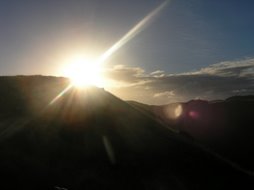
Once you develop this internal tracking system, the next step is a gradual letting go of the patterns that cover the Sun of consciousness like dark clouds. When the clouds are gone we become "Enlightened," we become awake. This awakening is a continuum. In other words, just as there are various levels of sleep and wakefulness, there are different levels of spiritual awakening.
The reason for this is that we peel off in gradual stages the structures of the wrong programming of the self like onion layers until we reach the center. Many religious doctrines, dogma and concepts are not true. When we believe them, they limit our spiritual growth because they conflict with the direct experience the Inner Guide is teaching us. The conflict between dogma and the Inner Knowing can cause confusion until we learn to trust the truthfulness of the Knowing from within.
The Inner Knowing must be tested. In other words, you must develop a process where the Inner Knowing is put to the test so that you are not misled by tricks of the ego. Some authorities call this testing process discernment. If there is any warning to be heeded on the path, this is it. Put your Inner Guides to test before you trust them.
In summary, the awakening or enlightenment begins with an insatiable desire to understand the mysteries of life. This desire is intensified at times by pain, suffering or an encounter with a divine soul. The divine soul or Spiritual Master, through entrainment – a process which resembles harmonic resonance – can activate the seed of spiritual unfoldment or the enlightenment can happen immediately. Or you can develop a deeper relationship with your Inner Guide. You learn to work with your Inner Guide through discernment, cutting short the sleep-walking stage most people are in at the moment.
Enlightenment is the consciousness of the Sun shinning at noon on a cloudless summer's day. Waking up to the Sun consciousness is what life on earth is all about
Do not believe any word you are about to read. Life offers more than what the eyes see, more than what the ears hear, more than what the body antennae perceive.
Do not believe their stories. Those who say they have merged with the All, who have observed the space within the atom without electron microscopes, who have described the rings of Jupiter before the probes, those who have crossed the void and have survived and now can read your mind like a movie, the future like a documentary, the past like a museum, the Enlightened Ones are here with us.
If you live here long enough you will see, hear, and touch one of them. Maybe you have already. Maybe not because after the enlightenment everything remains the same: The beaten old car, the mansion, the work in the mines, the kids, the boss and the chores. Everything remains the same. Except now only the observer perceives. And you ask, now what? Don’t bother to know.
If you desire it enough, you too can live their stories. And it is your tales that others will tell.
But do not believe me. Maybe you should find out for yourself.
Over the past weeks, I’ve noticed I’m coming to an understanding of a way of relating to others. I call it "being there."
Being there is a state of mind. An emptying of the self so that the other may be filled. A decreasing of the little self so that the greater Self may increase. Being there is being lived. I used to be the marker that wrote on the board. Now I’m becoming the board on which the markings are etched and cleaned because I’m learning to be there.
On Sunday August 12, 2007, we watched Ratatouille at the Loews Alderwood Mall theatre. Brad Bird directed this multi-layered Pixar Animation Studio movie.
On the surface, Ratatouille tells the outlandish story of intrigue at a leading Parisian restaurant. Its distinguished owner, Auguste Gusteau, had died because of a foodie’s harsh review. Remy, a sensitive rat and who has a flair for cooking, contacts the deceased restaurant owner, who reveals to him his culinary secrets. Linguini, the garbage boy, is forbidden to cook because he is clueless about cooking and has not yet gone through the rigorous training required. Unknown to everyone, though, he is Gusteau’s son. Remy and Linguini become friends. The movie is about this unusual alliance.
On a deeper level, Ratatouille dramatizes the challenges of communicating with an inner source of knowing. Throughout human history, sages have told us we all have our Inner Guides. In Plato's Symposium, Diotina and Socrates discuss the idea of a daemon that “great spirit…who interprets, between gods and men, conveying and taking across to the gods the prayers and sacrifices of men, and to men the commands and replies of the gods.”
In the New Testament, Jesus promised to ask the Father to send the Holy Spirit to his disciples when he is gone. "I will talk to the Father, and he'll provide you another Friend so that you will always have someone with you. This Friend is the Spirit of Truth. The godless world can't take him in because it doesn't have eyes to see him, doesn't know what to look for. But you know him already because he has been staying with you, and will even be in you!"
In Hawaiian mysticism the Inner Guide is the Aumakua, an “utterly trustworthy parental spirit” The Aumakua is “your spiritual guide who has access to all the resources you could ever need to accomplish your goal.”
In Ratatouille, Remy symbolizes the Inner Guide, the daemon, the Holy Spirit and the Aumakua. He hides in Linguini’s torque where he directs him in the same way that the Inner Guide is invisible to others. Linguini becomes a superb chef by simply following Remy’s guidance just as those who have established the connection with their Inner Wisdom know that their genius is not the result of their own efforts.
Many stories surround the origin of the chef’s torque. It has been used as far back as 1500. The torque has functioned as protection for the chef’s head from falling grease in badly ventilated medieval kitchens as well as falling hair from bald chefs. It is believed that the torque functioned as a symbolic crown, signifying the important role cooks play in the royal court. It is in that symbolic torque sitting on top of the head, where Hindus locate the Atman or High Self, that Remy hides.
Trusting our intuition, a form of the manifestation of the Inner Guide, does not come easily. Our intellect and cultural domestication squelch the Inner Guide and it is shameful in Western society to admit that one has an Inner Guide. The struggle that comes with this partnership with the conscious mind and the High Self is clearer after watching Ratatouille.
The power of the movie resides in the transformation that occurs when Linguini realizes that he owes his success at the restaurant to Remy. Until an individual has developed trust in the functioning of the Inner Guide, the will to revert to the logical mind remains a tempting alternative. With time, when the Inner Guide has proved itself, we are willing to risk everything because we know that the Inner Guide does the work. “It is not I but the Father in me who does the work,” Jesus said.
Many of my friends work successfully with their Inner Guides but it is not easy to explain to others how the process works. Ratatouille helps us understand in a funny way the mysterious psychological and spiritual phenomenon of connecting with something greater than ourselves living within us. Beyond the comedy and the fantasy, Ratatouille is a dramatization of a powerful spiritual process, which explains the satisfaction it gives because it points to the deep truth of the peace and confidence that comes from connecting with the well of wisdom within. There is a Linguini in each of us as we struggle to survive in our Father’s restaurant, called life on earth.
As we tour this sacred site called Earth, we work hard to visit many spaces, to make the best of our pilgrimage. I remember going on a vacation one summer with a friend a couple of years ago to Victoria, British Columbia. We walked to many of the tourist sites, we visited the museum in the building that looked like the British Parliament, listened to music on the waterfront and explored the Butchart Gardens. The experience remained unforgettable but tiring. I thought vacation was meant for rest.
Between too much walking and sleeping throughout this pilgrimage called life, emerges a middle way. As we reflect on what the spiritual life entails: overcoming our human weaknesses, taming our animal tendencies, living mindfully and uniting with the divine in the process, serving ourselves in others, and the list goes on and on, this thing called spiritual practice can assume the dimensions of tedious work served us by a cruel taskmaster.
If we forget one great secret, that is. Spirituality is all about grace. If we meditate for hundreds of hours without the touch of the Master, in vain we practice. In vain we punish the body through fasting and vigils, through torture of any kind, in vain the struggle to overcome our faults if we fail to invite the Unknowable One to sanctify it all, if we refuse to allow the All-knowing to do the work in us.
Around February 2007, I noticed a particularly devastating planetary configuration in my partner's natal and progressed charts involving the planet Saturn. The aspects would be in force for about four months. I didn't know what to do.
I told her: "Please, please, please, do me a favor in the next months. Pray, meditate, connect with your high self." I have come to understand that when people have challenging aspects, the solution is for them to raise their spiritual vibrations.
Sure enough, in early spring Saturn knocked at our door asking for Dawn bringing her fear at work, rejections, depression, and more. I was tempted to do the work for her.
I remember one morning just when the four-month ordeal started. I had finished assisting her with a particularly powerful meditation. When she left I had this insight from within me that said: "Let go and let her work through this herself. Just be there for her. Don't do anything on her behalf."
I listened. Every day, for weeks, I heard one work trouble to the other. All I did was listen. It was so difficult.
Let me cut a long story short. She came back home one day almost four months after it all began, I think it happened the week after her birthday. She came home and said she had an amazing insight that brought her relief. All her troubles seemed to have melted away. Someone who made Dawn’s work particularly difficult resigned that same week.
Dawn's story reveals the power of surrender. The power of grace in our spiritual paths. The power of trust in the Great Mystery we call God. She helped me understand this spiritual secret: it's all grace, the path is God's work.
As we allow ourselves to be the living temples of the divine, God will walk with us through the darkness and through the abyss. God is on our side as we climb to the spiritual mountaintop. The spiritual path is an effortless journey of surrender to the power of God's grace.
I talked about the suicide to my colleagues. They described these conversations as "most terrible and hideous." And I tell them, well, at some point we have to face the dark side of life which is our shadow.
Of the human shadow, Carl Jung wrote: "Unfortunately there can be no doubt that man is, on the whole, less good than he imagines himself or wants to be. Everyone carries a shadow, and the less it is embodied in the individual's conscious life, the blacker and denser it is. If an inferiority is conscious, one always has a chance to correct it. Furthermore, it is constantly in contact with other interests, so that it is continually subjected to modifications. But if it is repressed and isolated from consciousness, it never gets corrected."
Ignorance of the shadow gives it power because once it comes to our awareness we begin to face it. Its power disappears gradually.
As I talk to close friends and family about it, I was surprised to know the number of people who have friends and relatives who have chosen this way to leave the world. In fact one of my very dear friends told me she had attempted suicide so many years ago.
A companion on the path wrote to me: "Suicide leaves everyone guilty of neglect… And beyond the guilt, I think we all recognize in our subconscious the extreme wish to "get out and do it now". It is focusing on the primal instinct of survival that blocks the human process of exploring suicide."
I feel blessed to be surrounded by friends with different experiences and who offer me such insights at times like this. I don't feel guilt about my colleague's decision to take her life. I feel a terrible sense of loss and waste. And as I reflect on this loss, I remember the words of Yun-Men Wen-Yen a Chinese Zen master who lived more than a thousand years ago.
"Life is precious; if you miss this chance, it may take a billion eons before you receive a human body again. If even a worldly man like Confucius said, "He who realizes the Tao in the morning can die content in the evening,"...Please do your best, and take good care of yourself."
While the news was breaking about my colleague's death on Wednesday July 26 in Washington State, another tragedy was unfolding in California.
Danny Takemoto forgot his 11-month-old son in a Honda Odyssey minivan and went to work for more than five hours in Concord. The temperature exceeded 80 degrees. The day care called the baby's mother to report her son’s absence. When she called the husband at a little before 4 pm, he rushed to the minivan. He found the child strapped in his seat, dead.
Takemoto, who was sent to Contra Costa County Jail in Martinez, worked for a Siemens AG division.
We don’t know what caused Takemoto to forget his son in his car. Might this be stress related?
In 1992, a United Nations Report labeled job stress "The 20th Century Disease" and in 1996, the World Health Organization said it had become a "World Wide Epidemic."
The American Institute of Stress reports that “In California, the number of Workers' compensation claims for mental stress increased by almost 700 percent over eight years and ninety percent were successful with an average award of $15,000 compared to a national average of $3,420”
The National Institute of Occupational Safety and Health relates the experience of David in a manufacturing plant. He speaks for many American workers when he says: "Since the reorganization, nobody feels safe. It used to be that as long as you did your work, you had a job. That's not for sure anymore. They expect the same production rates even though two guys are now doing the work of three. We're so backed up I'm working twelve-hour shifts six days a week. I swear I hear those machines humming in my sleep. Guys are calling in sick just to get a break."
Northwestern National Life survey reports that 40 percent of workers say their job is “very or extremely stressful.”
The tendency to blame Takemoto for his carelessness is high. Empathisizing with Takemoto should reveal the horror he is going through. How is he facing his wife? How is he going to ever forgive himself?
And when we look at this event in its wider context, might this be the visible effects of what organizations are doing to the psyche of their employees?
In this specific case, I wonder what Siemens offering daycare to its employees will do to reduce stress for their workers? It is ironic that such a tragedy should happen on Siemens campus because the company is noted for its life-saving products.
Management should find out how much stress its employees are now experiencing. Many other Siemens employees may be silent victims of the effects of the same stressful workplace: reorganizations, meeting deadlines, and profitability. This should be a reminder that the geese that lay the golden eggs should be adequately taken care of. Takemoto’s innocent child's death will not have been in vain.
We entered seminary together in the fall of 2003. Over the years I took several classes together with her.
I wrote a joint paper with her in the winter of 2005 when we took the last UU Polity course that Peter Raible taught.
I remember her forthrightness, her humor, her heart for the poor. She volunteered at Tent City on several occasions. She participated in her church where she touched many lives.
She was a single mother of a 12-year-old boy. I remember she showed me her son's picture and told me how much she loved him.
I was at the grieving ceremony on Thursday night at the Woodinville UU church where I lighted a candle for her.
I am sad that she chose that final and absolute way to leave this world. I hope that her death will not be in vain. That through her death we will go deeper in our understanding of what it is to be there for one another, what it is to be a true community, in a suicide economy.
A farmer found an eagle's egg and put it in the nest of a backyard hen. The eaglet hatched with the brood of chicks and grew up with them.
All his life the eagle did what the backyard chickens did, thinking he was a backyard chicken. He scratched the earth for worms and insects. He clucked and cackled. And he thrashed her wings and flew only a few feet into the air.
Years passed and the eagle/chicken grew older. One day he noticed a magnificent bird far above him in the cloudless sky. It glided in graceful majesty among the powerful wind currents, with scarcely a beat of his strong golden wings.
The eagle/chicken looked up in awe. "Who's that?" he asked. "That's the eagle, the most magnificent of all the birds," said one of the backyard chickens. "The eagle belongs to the sky. We belong to the earth—we're chickens."
Then the eagle/chicken became surprised. “How did I become an earth-bound bird?” he asked. He looked at himself for the first time and discovered that he looked different from the chickens. He saw that he had stronger claws and a larger spread of wings than the chickens in the farm. He desired intensely to fly like the eagle, magnificent above in the sky. But he was frightened.
“Look, I am used to scratching the earth for worms and insects. Where will I find the worms and insects to feed myself?" he asked himself. He was immensely terrified at the prospect of being free and flying into the unknown alone. Then again, he thought about his previous experience. He could fly only two or three feet into the air. “I can't fly like this eagle in the sky,” he said in despair to himself.
One day, the eagle/chicken noticed that he could fly a little faster than the chickens in the farmyard. He hurried to a short tree nearby, steeled himself and tried to fly. He flew about ten feet. He discovered that he enjoyed staying in the air, even if it was only a few seconds longer. Something within the eagle/chicken propelled him in the air. Unfortunately, he got tired too soon and fell down to the ground.
The chicken in the farm saw him. "We saw you fly. You looked like the magnificent eagle we saw the other day. Sooner or later, you are going to fly away into the deep blue sky, away from us," the chickens said. The eagle/chicken remained silent, not knowing what to say about such an unexpected comment. Encouraged, he went back a few days later, and while he tried flying again, he saw a wild eagle who took him in his wings. The wild eagle taught eagle/chicken the ways of eagles. Eagle/chicken learned to fly like all eagles do, hunt mice in the forest and fish in the river. After this encounter, eagle/chicken perched on the tallest tree, with a gentle wind blowing over him. He pondered how, as an earth-bound chicken in the farmyard, his life was incomplete and his potential was unrealized. "I am glad I discovered who I really am,” he said with teary eyes to himself. “I am glad I followed my dream."
What's wealth, power, and fame without peace of mind?
Ananse was in his mid-thirties. He had a wife and two children. He had worked his father’s farm. No matter how hard he worked, he remained in debt. He decided to end his financial troubles. He traveled to a far away village to consult a medicine man.
The medicine man asked Ananse for the name of a dear family member. Ananse gave him his wife’s name. The medicine man performed a ritual and told Ananse that when he returned home, money would be in his closet. He also told him that he should not weep for anyone who died when he was away.
When Ananse got home he discovered his wife was dead. His wife’s sudden death shocked and saddened him but he obeyed the medicine man. He did not weep for his wife. He discovered that his wife died on the same day and at the same time that the medicine man asked him for her name.
Ananse opened his closet. He found boxes of hundred dollar bills. Ananse became wealthy overnight. Ananse built many houses. He remarried. He became a respectable member in the society. But Ananse was not happy. Every night, as he closed his eyes to sleep, he would see his wife, weeping, pleading to be set free.
Ananse could not drive his wife’s spirit away. Gradually, the wise men and women in the village found out what Ananse had done. They did not banish him. They allowed him to stay in the town but no one had any dealings with him. Although Ananse had all the money he wanted, he lost his relationship with his family and the community. He did not have peace of mind.
Many of us are like Ananse making the choice unknowingly between what the world promises us and our peace of mind. If you knew you could be the richest person in the world and lose your friends and family and your peace of mind, what would you do? And if you knew you could be the most famous person and most powerful individual but would lose your family and friends and your sanity what would you do?
Peace springs within us in a well that does not dry. Access to that peace is independent of what happens to us from the outside world. Our spiritual Elders have told us about a priceless diamond within us that we must all mine. They have reminded us over and over again that we should desire this peace within us above everything else. For some this peace within is synonymous to the presence of God and to the Kingdom of God.
I leave you with the words of Joel S. Goldsmith as he describes the process of obtaining this inner peace. As you meditate on these words, you may substitute God with the word peace. See what happens when you spend some time in this frame of mind. Shalom!
“If I desire God with all my heart and with all my soul and with all my mind, do I have room left to desire anything else and is there anything for me to desire after I have given my whole desire to God? I desire only God - to know You rightly - to live consciously in Your presence. This is my desire and all other desires I surrender to You. No longer do I have any desire but to know You rightly. Ambition? What ambition is there? What is there that I could be ambitious for after I have known God? Is there something in the world of greater value than God? Is there something of greater benefit than God? No. No. Knowing God, having God, I can have no further ambition, and I can surrender my ambition unto You. Hope, desire, ambition, fear. All these I surrender. And now, there is nothing left in the external world for me to be attached to.”
I am you receiving the medal in Australia. I am you staying home to take care of your new born baby angel. I am you in Stuttgart, and Brussels, and in Paris. I am you as you savor the wonders of the world. I am in your buds tasting exotic foods and wines. I am you watching sunset on the Pacific and sunrise over Kilimanjaro. I am you watching the birds in spring, watching the animals come to the river at dawn. I am you saying goodbye to your hosts in Kenya and Peru and China. I am you proud of your daughter's new job, new creation, new home, new husband. I am you smelling the flowers in the Bellevue and Butchart gardens and the garden cities of the world. I am in you listening to the summer music on the beaches and parks. I am you swimming with the dolphins in Kona in Hawaii. I am you sobbing at night, cursing sunrise. I am you planning to take away your life. I am you ashamed of your body, ashamed of your life, guilty that your grand daughter has been molested. That your son is in prison. I am you unappreciated at work, at church and at home. I am you watching your husband die slowly. I am you mourning mother’s death. I am you afraid of the next attack. I am you lost in the forest of life without a path to come back home. I am you. I am with you in the joy. I am with you in the despair. You are not alone. I am you and you are that.
Prayer of the 246 million child laborers, 250,000 infected with HIV/AIDS every month, and 300,000 child soldiers
Only You can heal The wounds in our hearts Only You can hear The cry of our spirit Only You can breatheLife into the dead bones Only You can set us free Only You can sustain our world Bringing together all people Into one peaceful family Only You, God, Can It is in your name, El Elyon,* We trust.
Love for women has inspired great works of art, music and literature. Yoko Ono influenced John Lennon's music; Hester Thrale's letters inspired Samuel Johnson's writing; the Russian-born psychotherapist Lou Andreas-Salomé enthralled Rainer Maria Rilke, Friedrich Wilhelm Nietzsche, and Sigmund Freud. Ludwig van Beethoven dedicated the Moonlight Sonata to his pupil, the 17-year-old Countess Giulietta Guicciardi. Charlotte Buff inspired Goethe’s The Sorrows of Young Werther and Beatrice Portinari was an inspiration for Dante Alighieri’s Divine Comedy. Romantic love has served as a catalyst for creativity.
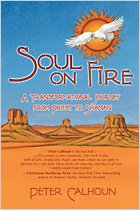
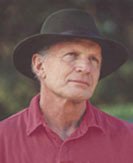
Like the women who have inspired great works of the past, an American woman, Astrid Ganz, is the inspiration for Soul On Fire , by Snow Eagle (aka Peter Calhoun). This is a collection of stories about the spiritual transformation of an Episcopalian Priest turned shaman.
“I dedicate this book to Astrid Ganz, my earthly partner and twin flame. No matter how many people you touch with your joy, laughter, and healing hands, no one will ever be touched more deeply than I. With all the miracles in my life, none can compare with how you stepped out of my dreamtime into my waking life to love and restore me.”
Snow Eagle was the ordained minister of St Jude’s Episcopalian church in Alabama for ten years, until the spring of 1968 when he left the ministry because he wanted to be true to himself.
“I would have been walking a paradox if I had remained in the church,” writes Snow Eagle. “My beliefs had changed so radically that I could not, in good faith, continue teaching the catechism, creeds, and doctrines that I had vowed to uphold at the time of my ordination.”
Soul on Fire is the unbelievable but true story of Snow Eagle’s thirty year quest as a shaman. Prepare to suspend disbelief as you read miraculous story to mysterious account of the author’s experiences: from making sticks spontaneously combust to making rain fall after a long spell of drought; from communicating with bees and asking them to leave a house they were taking over to having dreams that materialized in the physical world.
Snow Eagle had a recurrent dream about a woman. One day at a workshop he met a woman who looked exactly like the person he had been seeing in his dreams. “Twin Flame” tells the story of their coming together. Astrid Ganz entered his life when Snow Eagle’s health was failing. Astrid brought him hope, love and healing.
Soul on Fire is a story of the transformation of consciousness through the shamanic vision quest. It is the story of the magical world we live in. And it is the story of one man’s search for and discovery of true love.
The night before her annual mammogram in the summer of 2003, Jan Frazier said a prayer. "Could I maybe do this [mammogram] tomorrow without being terrified?" Jan, who turned fifty that summer and had endured three breast cancer scares in her early thirties and forties, was afraid of an early death. This is understandable. In 2003, the U.S. Cancer Statistics Working Group reported that one out of every four women diagnosed with breast cancer dies.
"The specter of a possible young death put fear in my face, the ugly thieving monster of it," Jan writes in her soulful story of spontaneous awakening: When Fear Falls Away.
The following morning when this mother of two teenagers went to see her radiologist at a Jamaica Plain hospital, in Massachusetts, she noticed a change.
"I really was not afraid today. I couldn't get over it. After the films were taken and then the waiting began, I watched myself sit comfortably in the waiting room, reading my magazine, paying attention to what it said, instead of how it always was in the past, looking at the pages but not really seeing them."
When Fear Falls Away is a "testimony to a life transformed – an ordinary, fully suffering life transformed." It is about a middle class American woman’s victory over her worries about children, guilt, others' opinions, health, money, and fear of death.
There's so much suffering in our world. Even those who appear to have everything going for them are hurting deep within. The big cars, mansions on beaches, and the latest electronic gadgets do not in themselves satisfy our deep yearning for inner peace. When Fear Falls Away tells of the ocean of joy that is possible for all of us when we turn within to the inner consciousness. Material joy is like a drop in that vast expanse of deep peace.
Theravada Buddhism teaches that "enlightenment consists of the complete eradication of craving and attachment." In Zen Buddhism, it comes through emptying of the mind. In Western Christian literature, enlightenment is union with God. In Orthodox Christianity, it is divinization, or the process of becoming God.
Many doors lead to enlightenment's interior castle and include various forms of spiritual practice: meditation, devotion, and prayer. Mathematical or philosophical abstraction and being in the presence of enlightened individuals are other doorways. Enlightenment can also happen spontaneously.
These experiences are ineffable, difficult to express in prosaic terms. In Western Culture the enlightened individual can be misdiagnosed as mad if the individual experiencing this breakthrough in consciousness is not sophisticated enough to check himself or herself. At a diner while she was having breakfast with Peter, her significant other, we see Jan struggling to control her overwhelming urge to go out to tell everyone eating: "Do you know how lucky you are to be alive?"
Enlightenment is the most sublime change any individual can experience.
"The world has not changed. It is the looker who has changed. But I keep having to hit myself upside the head to believe the world is its same self. I cannot believe it. It's like I want to say, What? It's been this way all along? You mean, I could have lived my whole life this way, spared myself all that pointless anguish?"
I have borrowed a copy of When Fear Falls Away from the local library for my significant other who is reading it. I have bought two copies: There are some books you skim and forget. There are some books you read to remember. And there are some books you study and keep. For me, Jan Frazier’s book is a book I will read and reread, marking it, making notes, getting clues and tracking down all the influences that have prepared Jan for this most wonderful of human experiences.
I imagine that unless you are a beneficiary of the current healthcare system, it's impossible to remain unmoved after watching Michael Moore's SICKO. The main thrust of the movie is that America as the world's most prosperous nation has failed to provide a healthy environment where everyone can continue to produce and benefit the society.
The movie shows that in America, life is OK when you are healthy and greater when you are wealthy and can afford to dole out the thousands of dollars to pay for surgeries and medical emergencies yourself. What SICKO is calling our attention to is that the way the current healthcare system is set up isn't working well for most Americans.
Since the healthcare industry is such a big part of the American economy, and because of its powerful interest groups, it's going to be a daunting task to get beneficiaries of the current system to let go of their stranglehold. "It can't happen in America," I've heard many people say after hearing about or watching SICKO.
I believe that it can happen here in America. Despite the enormous challenge and opposition we must anticipate let's not despair. Let's have hope.
We don't know how it will happen, but if America needs a miracle, let that miracle happen now that Michael Moore has set the ball rolling by generating enormous public awareness about a national malaise. This awareness needs nurturing with hope in our hearts sustained by wisdom of the ages that what we can conceive individually and nationally we can achieve.
Once Americans set their mind on something and decide to solve a problem nothing stands in their way. When this miracle is all done, the healthcare system in America will be one of the top seven in the world, which is America's natural position in international affairs. This is exciting.
Most Americans believe that there's a Higher Power that intervenes in human affairs. This is the time to call upon that Higher Power to bring the positive changes in the healthcare system for the benefit of all concerned under grace in perfect ways.
I don't know how this miracle will occur. What I know is that I’ve peace and the most wonderful feeling in my heart as I dream that every child, man and woman in this great country lives without fear of having to go to see a doctor, and that the healthcare available for every American is as secure as it is in Canada, Britain and France, and better than in poor Cuba.
How Long, O God? Out of the depths I have cried unto Thee, O Lord! Lord, hear my voice. -Psalm 130
Set yourself to rest in this darkness as long as you can, always crying out after him whom you love -The Cloud of Unknowing
How long, O God, Will this last?
This yearning Of the bride for the bridegroom, This merging of water droplet that I am Into the boundless ocean that God is, The fusion of this little Candlelight of awareness Into the limitless sunlight Of the all-pervading consciousness?
How long, O God, The tearing apart of this blinding Inner darkness, The peeling away of what is not?
When shall I see what is Beyond my own blindfolds Beyond blindfolds from others Beyond the cloud of unknowing
To behold the Sun That never sets The Divine Light within?
“If you haven’t tasted the meals other mothers have prepared, you think your mother is the best cook,” says an African proverb. Michael Moore’s movie SICKO shows us how tasteless Mother America’s healthcare meals have been.
Last night (Saturday June 23rd) we were among a packed audience at Seattle's AMC Pacific Place Theatre that watched a sneak preview of Michael Moore's comedy about 47 million unisured Americans with no healthcare in the richest country on Earth and the insured who are denied their benefits when they most need them.
From one horrifying healthcare story to the next, SICKO documents the miserable plight of countless Americans the US government has betrayed to the American Medical Association, health insurance agencies, HMOs and pharmaceutical companies.
Human life, for these powerful businesses and interest groups, appears worthless, and all that seems to matter is the multi-billion-dollar profit they make off the people's suffering, pain and blood. It’s like a hen sucking the yolk out of its own eggs.
SICKO unmasks the glaring hollowness of American economic prosperity, military superiority, and democratic ideals. What's a nation's wealth or worth if it fails to care for its sick children, if it fails to heal its wounded in the line of duty and if it fails to aid its helpless elders, widows and pregnant women?
Is this the America George Washington, Thomas Jefferson, and the other founding fathers had in mind? Is this the beacon of democracy, the land of milk and honey, of freedom and justice under God for all?
In SICKO Moore juxtaposes emotionally wrenching scenes with generous and entertaining humor that sow the seeds for an open and honest discussion of the shameful state of America’s healthcare system.
If free universal healthcare is good for Canadians, the French and even Cubans why is it not good for Americans?
With SICKO Moore establishes himself as a master social critic who informs the people and lets them decide.
Since imagination is everything, the next step for the US is to visualize Mother America as the best cook on the block. Visualize universal healthcare for all Americans. Imagine that all the good things about the French and British and Canadian healthcare systems are right here in America, because energy follows thought! Being able to imagine the health care system we desire is the next step toward making this dream a reality.
The Gye Nyame symbol comes from the people of Ghana in West Africa. It means “Only God.” It affirms the trust of many Africans in God who alone is able to do mighty things
Flying Falcon
Male Peregrine Falcon flying high. Photo: Emily Eaton
No War
Many people in America and in the world want peace
Soul on Fire
Experience the magic of the natural world
Snow Eagle
Peter Calhoun Episcopalian Priest turned Shaman with new name Snow Eagle
Kwami Esseboe Nyamidie is a part-time library support staff for the Sno-Isle Libraries. Kwami holds a Bachelor of Arts degree in French Literature from the University of Port Harcourt, Nigeria, and a Master of Arts in Transforming Spirituality from Seattle University, USA. Kwami is also a part-time Spiritual Director and author of Ready for your love and other poems. Originally from Togo, West Africa, Kwami lives with his wife and step-son in Washington State, USA.